CAF Cup First Games Tactical Masterclass Lessons Learned
About this episode
CAF Cup First Games Tactical Masterclass Lessons Learned
Listen now on Spotify, Apple Podcasts, Amazon and other streaming services! Don’t forget to subscribe, share, and leave a ⭐⭐⭐⭐⭐ review to help more players and coaches discover the power of Techne Futbol and Data Technology in the beautiful game.
#TechneAfricaFutbol #TechneFutbol #TrainWithTechne #Playermaker #TraceFutbol #Hudl #FootballTech #FootballInnovation #PlayerDevelopment #CoachTools #SmartFootballTraining #AfricanFootball #CAFOnline #FIFA #FIFAYouth #CAFDevelopment #YouthFootballAfrica #NextGenFootball #FootballScouting #TalentIdentification #DigitalScouting #EliteYouthDevelopment #FootballJourney #FootballAnalytics #FIFAForward #FutebolAfricano #TrainTrackCompete #FootballExcellence #FootballAfrica #TheFutureOfFootball
Welcome. Welcome back to the Deep Dive. Clear your schedule, sharpen your focus, because today we are strapping in for an absolute tactical master class. We really are. Ulled directly from the continent's most intense battlegrounds. The initial stages of the CAF Confederation Cup group phase. This isn't just a recap, you know. This is a strategic download. That's the mission, absolutely. We've been monitoring 4 distinct theaters of action groups, ABC and D, and we are here not just to report the scores, you know, we're here to distill pure actionable knowledge.
We are looking for those systematic, repeatable factors that separate the successful clubs from the ones that fall short in this environment. It's like getting a shortcut to well informed strategy. We want to understand what makes the African game tick when the stakes are at their absolute peak, what decisions are genius and what tiny lapses of concentration prove fatal. Exactly. This is all about taking the wisdom, the experience and sometimes the harsh lessons from these opening matches and applying them to elevate the performance of the entire African game.
And we'll be analyzing everything from the, you know, the granular details of how the goals were scored. The mechanics of it. The technical mechanisms used all the way to the broader strategic movements, like the profound impact of fresh legs from the bench or the tactical shift toward using full backs as attackers. And that huge difference between veteran composure and, let's say, youthful ambition in that final third of the pitch. That's a big one. OK, let's unpack this crucial information. Let's start with the element that so often dictates the entire narrative of the match, the power of timing, late strikes, and substitute impact.
We talk about 90 minutes of football, but these sources really show us that success is often concentrated in maybe 8 key minutes of that game. What timing is everything in a competition this physically demanding? When travel is grueling, the air is heavy, and the intensity is just relentless. Matches tend to be decided when opponents are physically exhausted or mentally confused. These critical moments always seem to cluster right at the psychological breakpoints of the game. Let's. Start with what we're calling the pre halftime punch.
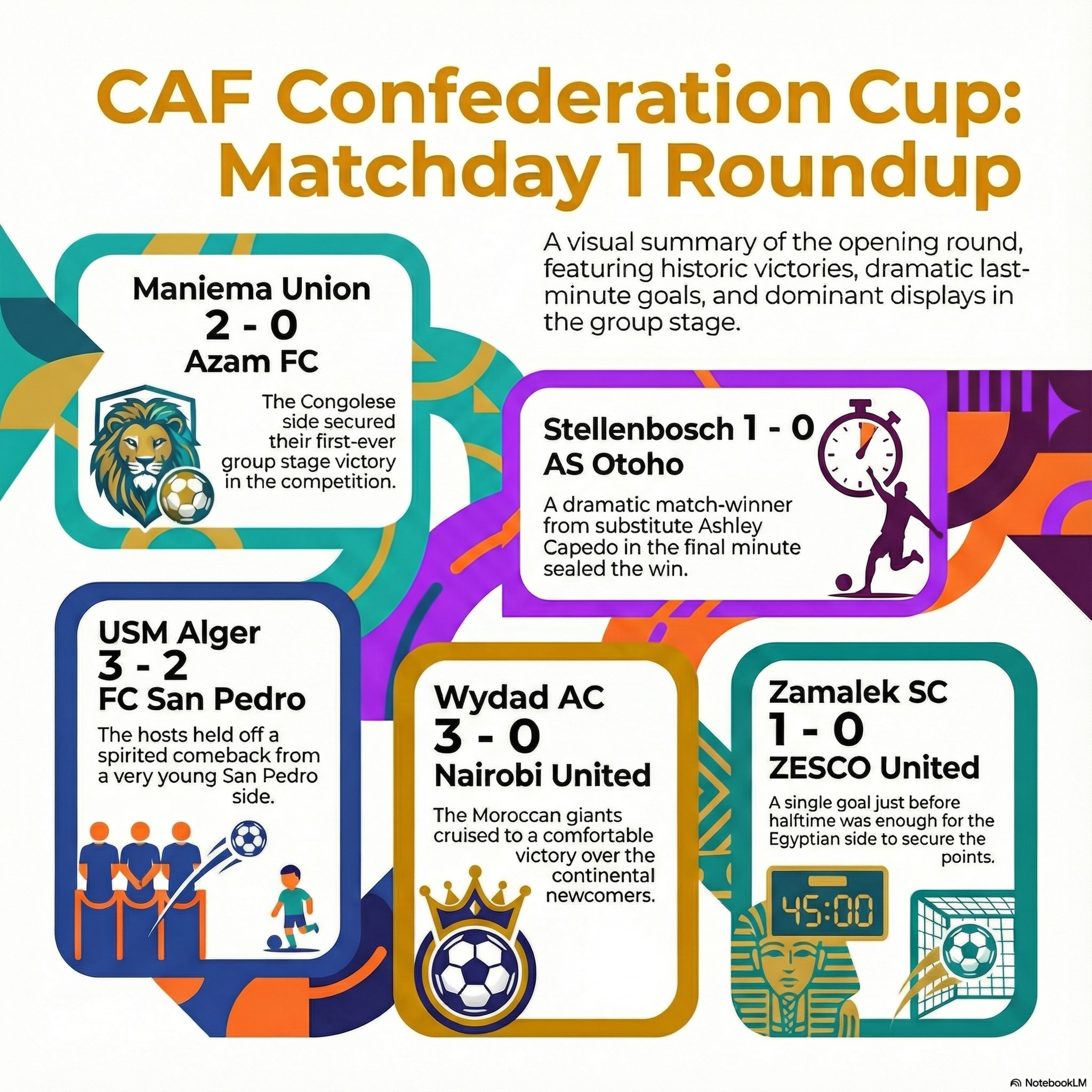
Look at Manami Union against Azam. The match was tight, extremely cagey, both teams sort of canceling each other out. It was a. Stalemate for a long time. And then, right on the 45th minute, Christian Balako scores their first ever group stage goal and it secures a critical lead. Why is that specific moment, the 45th minute, so devastatingly effective? It's a massive psychological blow. I mean, think about it. If a goal is scored earlier, say in the 20th minute, the team has time to absorb the shock, reorganize, maybe even hit back.
You can reset. You can reset, but when that goal lands precisely on the stroke of halftime, the defense has no immediate opportunity to adjust. They walk into the dressing room having lost all the momentum they built. So their entire team talk changes. Completely. To spend their 15 minutes trying to solve a problem under pressure rather than discussing their planned second-half strategy. It's a momentum killer. And the mechanism of the goal itself is key here. It wasn't some sudden flash of brilliance out of nowhere.
The material suggests this goal was a direct result of relentless high pressing and harrying. And that's the tactical persistence. We need to focus on the mechanics of that high press. It wasn't a disorganized chase. It implies A structured press, likely initiated by a trigger. Like a bad pass or a slow touch. Exactly corrects a slower than average touch by an exam defender in their own third. Is Anne's concentration flagged because the effort required to fend off this press just eroded their mental stamina right as they were anticipating the whistle?
So Balaka was just in the right place at the right time. Well. He was positioned correctly because the tactical framework demanded he be aggressive and opportunistic. He didn't just capitalize, he was there to do exactly that. And we saw a similar, you know, momentum shifting strike in the Zamalek versus Zesco match. Zamalek was visibly starting to struggle to create consistent clear chances. They seemed a bit frustrated. And then Cipher Din Yaziri scores in the 43rd minute, a moment of pure individual quality, a precise strike bending into the far corner.
But it happens right before the interval. And this confirms a critical strategic pattern, doesn't it? When an experienced team finds it hard to break a team down structurally, they maintain the effort until they can unlock that single moment of individual quality. And they time it perfectly. They time it perfectly. Zamalek needed that goal. It prevented A potentially fraught second-half where Zesco might have grown in confidence having held the Giants scoreless. Yaziri's precision strike wasn't just skill, it was maximizing a tiny window of opportunity.
But the timing lessons don't stop there, they extend deep into the second-half, into time added on. Let's move into what we're calling the game sealing substitute effect. The use of bench depth is proving to be the ultimate late game weapon, isn't it? This is where elite physical conditioning meets castute tactical management in a competition known for grueling travel and often, let's be honest, challenging pitch conditions. The introduction fresh, highly motivated and focused legs is just exponentially more impactful.
Stellenbosch provided the perfect textbook example here. They were locked in a frustrating scoreless draw against Azatoho, grinding towards what looked like a disappointing point. Then, deep in time added on, the match winner arrives courtesy of a substitute, Ashley Capito. And we have to dissect that sequence. The goal came from excellent vision on the past. The critical element we'll definitely discuss later, but the execution by Capito, it speaks volumes about the required mindset of a substitute.
He stabbed at home first time. First time that shows immediate clinicality and focus. He didn't take an extra touch. He didn't allow the defense time to reorganize. He was decisive. And the source points out a fascinating detail. He was kept on side by the opposing skipper Prince Moanza. And that right there, that's the story. That slight lack of defensive organization or fatigue induced lapse in concentration from a veteran leader is exactly what the fresh aggressive substitute exploits. Quality delivery plus clinical finishing from the bench.
It's deadly. The sources are right. It's absolutely deadly. And it wasn't a one off look at many Emmy Union again. Their two nil victory over Azam was sealed when 2 substitutes combined. Oh, this is beautiful. Shiden delivered what was called an absolute perfection of a ball and McKenna headed at home. That's Pappy Komodo's tactical foresight paying huge dividends right there. I mean when you bring on two players who can immediately connect on a complex sequence like that. A perfect cross and a clinical header.
It indicates that the tactical changes were practiced, they were understood and they were executed with high confidence. That's not luck, that's depth delivering. And it's not just a strategy for teams needing a late winner. Even teams that are already dominating used this tactic to solidify their position. Why dad? Cruising at 3 nil against Nairobi, United used Muhammad Ray, another sub, to score their final goal. And the finish was noted as a scuffed and unconventional. It sort of looped over the keeper, Kevin Odwar.
That detail is actually highly instructive, isn't it? It really is. It proves that execution purity is secondary to creating positional advantage when the defense is mentally and physically broken. Absolutely. The energy, the aggressive run and the position recreated destabilized the defense so much that even a less than perfect strike found the net. The core lesson here for African clubs is twofold. First, depth must be a priority in recruitment, and 2nd, your substitutes have to enter the field with a kill shot mentality ready to be immediately aggressive and clinical.
Because those windows of opportunity are just so fleeting. And so decisive. So we've established when and who is scoring these decisive goals. Now let's transition to the how. How are these successful African clubs overcoming the typical deep defensive blocks we see in continental football? Great question. We're moving into attacking strategies, set pieces, full backs and verticality. Will the best teams utilize strategies that disrupt that traditional defensive structure? If you rely only on open play, highly organized defenses are just going to stifle you.
They'll shut you down. South specialized repeatable scoring methods like high quality set pieces and the advanced use of full backs. They become non negotiable weapons. Let's start with mastering the set piece. This is the great equalizer, isn't it? It absolutely is USM. Algers 32V over San Pedro featured a fantastic example. Their second goal was a bullet header from Admoni Lulet driven down as the ground from a corner. And then that goal immediately doubled their lead. It punished San Pedro just as they were trying to regroup from the first strike.
Let's talk about the mechanics there. A bullet header driven down into the ground is often a planned routine. It's not just a hopeful ball into the box. Not at all. It requires a high quality specialist delivery. The ball has to be whipped in with pace hanging just long enough for the runner. Lil add to the attacker must have used an intelligent run to break free of his marker. This is not casual, this is dedicated training. It really raises the question, are African clubs prioritizing set piece precision enough Because we saw how dangerous it can be even when it doesn't result in a goal Stellenbosch nearly conceded right at the end of the first half.
If I remember this. When a free kick from Chio Vasotoho hit the crossbar, it was a heart stopping moment. That near miss completely validates the strategy set piece specialist create constant fear. When you have a player who can hit the crossbar from 30 yards out, the defense is forced to commit more resources to marking and organizing. It pulls them out of shape. It diverts attention from their open play threats. The lesson is clear, if you are serious about continental success, set piece precision is non negotiable.
It needs to be treated with the same importance as, say, penalty kick training. Absolutely. Now let's move to probably the most fascinating tactical evolution in modern football, and one that's proving decisive on the continent. The offensive fullback as a decisive weapon. Oh, this is a huge marker of modern, sophisticated African club strategy. The days of fullbacks being purely defensive anchors are, well, they're over. They're long gone. They are now primary creators and in some cases finishers.
The quintessential example was USM Algers captain Rodani, a right back who sealed their 32V with their third goal. A right back scoring the winning goal. The source describes it as a strikers finish, but if we want to understand the systemic success, we need to know the why. How does Rodani get into that position without fatally compromising the defense? It suggests an asymmetrical tactical setup. Rodani carried the ball forward on a dynamic run. This usually happens when the defense is stretched wide or when the winger ahead of him is tucked inside, creating that space for the overlap.
So it's a planned move. It has to be. Rodani must possess the engine to make that run and crucially, the composure to finish. Most fullbacks have the physical attributes, but very few have the finishing instinct. Rodani showed It fundamentally changes the geometry of the attack. And why? Dad, being a highly decorated continental side, showed they've clearly adopted this approach. Their strategy heavily emphasized fullbacks as primary offensive elements. Look at Amerabat. He was noted for his trademark chip passes and low chip deliveries.
This isn't just crossing, this is high level creative passing from deep positions. That puts immense strain on the opposition. Immense It forces opposing midfielders and wingers to track back deep, which fractures their organization and creates space either centrally or on the opposite flank. It's a tactical nightmare to defend. We even saw this principle applied by the losing side Azam. Their player Abdallah Imbala caused problems early on with runs down the left hand side. Which underlines the fact that this isn't an isolated strategy, it's a universal tactical imperative and modern African football attacking with is absolutely essential.
And if you combine that wide threat with speed, you unlock that third critical offensive strategy, verticality, and the over the top threat. Getting the ball forward fast, bypassing that midfield congestion. Exactly why Dad frequently used the long outside of the footpass over the top, particularly in the second-half. In continental football, midfields tire quickly. It's combination of high intensity and challenging conditions, so verticality is the intelligent way to exploit this fatigue. That long outside of the footpass is a high risk, high reward move.
It takes incredible skill. Immense technical skill to curl the ball around the defense and land it perfectly in the path of a forward runner. The instruction is clear. Use quick direct play to hit the back line before they can settle into their defensive block. We saw Zemalek looking for Yaziri with long balls and USM Alger started their match against San Pedro with a great ball over the top that led to an opportunity, so the intent is there across the board. It's the foundation of effective transition play.
It requires the technical ability to hit a 40 yard pass accurately and attackers who can time their runs perfectly to avoid the offside trap. It's vital for breaking down opponents late in the game. So these attacking structures and tactical intent are crucial, but they are worthless if the execution isn't clinical. Unfortunately, yes. This leads us to the harsh reality of the finishing conundrum. Clinicality versus missed opportunities, this is often the single biggest differentiator between a good performance and well three points.
Absolutely. The margin for error at this level is just minute. If you create five chances, you need to score 2. If you only create two, you probably need to score 1. And we saw a dramatic lessons in the cost of lack of composure. Azam's Kitambala, unfortunately, really stands out here. He had multiple glorious opportunities against Maniam and Union. He received what was described as excellent service, He really did. But he repeatedly failed to hit the target. And this is more than just bad luck, it's a breakdown of technique and composure under pressure.
He missed 1/2 folly and later a critical header that only needed to be guided back across the goal but went wide. And he had the ambition, but not the finish. Exactly, his lack of clinicality was a decisive factor in that 2 mil loss. When the game is scoreless, you cannot afford to waste gifts like that. If Azam had converted even one of those chances, the entire momentum shifts. And it's not always the fault of the lone striker, Azessa. United created good forward attacks in the second-half against Zamalek but they were consistently let down by the final pass or a complete lack of composure in the shot.
This points to a deeper tactical or technical deficit across the final third. They might be physically fit and tactically aware enough to penetrate the Zamalek defense, but when the moment of truth arrives, the decision, the decision on the final pass, the angle of the shot, they hesitate or execute poorly. Simu blazing a shot over the bar after finding space is a classic example of adrenaline overriding technique. So let's shift to where it works, where champions confirm their status clinical conversion success.
Why did's Muhammad Bushari provided the template for precision? His second goal was a powerful, beautiful strike with full laces right into the top corner. The keeper was helpless. That is the standard of execution required to dominate. And USM Elder's opener from Katja showed that speed of thought was the first time finish he capitalized instantly. Scored into what was essentially an open goal. Because he took the chance so quickly, the keeper Lovato couldn't get back in position. That speed of decision making is clinicality.
It's recognizing that fractional window of opportunity. And circling back to Zamalek for a moment, Yaziri's precise strike, if we're looking for systemic success, doesn't relying on one moment of individual qualities seem, you know, contrary to our mission? That's a great challenge, and while it was individual brilliance, we have to look for the systemic setup that allowed him to space. Zemalek. Sustained pressure, even when they were struggling, had subtly pulled the Zesco defense out of position.
It created that split second of time and the necessary shooting lane. So in a tight game, the systemic factor is maintaining the pressure. The individual quality is the finish. You need both. And finally, on this section, let's talk about aggression and ambition. We saw plenty of ambitious strikes from distance, many of which missed. Why is this still a valuable trait to have? Because it fosters the belief that you can score from anywhere. While a wildly ambitious shot that misses by miles is wasteful, the willingness to shoot, like Kidambala's desire to take on defenders, is a spark African teams need to encourage.
So you don't want to coach that out of a player. No, you want to refine it. The best players are brave enough to try the difficult shot, but they're also disciplined enough to know when the percentage play is a pass. You encourage the audacity while refining the decision making. So when the strikers failed to convert, the pressure immediately transfers to the back line. We have to move now to defensive structure and resilience because winning teams showed organization and relied heavily on key individual interventions, while the losing team suffered from lapses in concentration and, well, tactical indiscipline.
And defense always starts at the back. The contrast between goalkeeping, heroics and mistakes was just dark across all the groups. Azam's Zuberry Fumba Moody made a crucial sharp save early in their match, denying an early maniame Union break. That initial intervention kept his side competitive. And that early save is psychologically vital. It sends a message to the defense, I've got your back. Conversely, we saw the high cost of errors. Why? Dad's second goal was partly attributable to a poor punch from Kevin Odoir of Nairobi United.
Keeper errors just invite pressure, don't they? They do, and at this level, an invited chance often becomes a conceited goal. It's that simple. And let's not forget the narrow escape many in the Union's keeper. Deaton had a crucial fumble that nearly crossed the line but was saved by a desperate intervention. And that highlights the fine line we're talking about. That desperation, that crucial intervention, is often the job of the entire defensive unit. Was a recovering center back covering the line.
Zemelek Zika maintaining the one nil score line late on with a good save. Underlines the keepers function. Exactly covering for occasional defensive lapses, especially when the team is shifting to a protective time killing formation. Let's connect the defense back to the press. We established that Maniama Union one due to the high press payoff. But what does that high press reveal about their defensive confidence? It reveals. Immense confidence in their collective structure. You cannot successfully high press if your defensive line is nervous.
If one player breaks the structure, the entire team is exposed to a direct ball over the top. It's a high risk strategy. Very high risk. Their aggressive pressing forced an error for their goal because they were willing to commit numbers forward, trusting that they're back four and keeper could handle the immediate risk of a long counter. It requires superior fitness and tactical alignment. And finally, those small defining moments of tactical discipline and indiscipline that can unravel the best laid plans.
These are often the most frustrating ways to lose. We saw the yellow card given to Manima Union's Joy's Black for time wasting, which was considered pretty harsh. But regardless of the harshness, it's a valuable lesson. The interpretation of rules, specifically time wasting, can vary across referees and confederations. Awareness of this disciplinary risk is crucial on the continental stage. But the ultimate act of self sabotage was in the Y Dad match. Mondi was sent off for simulation, having already picked up a yellow.
Card that is just unacceptable at this level of competition, trying to fool the referee, especially when you're already booked. Is tactical suicide. It destroys the structural balance of your team, it forces the coach into premature defensive substitutions, and it gives an experienced giant like Y Dad an insurmountable numerical advantage. That structural integrity links perfectly into our next phase, experience versus youth, a study in contrasts. This analysis shows the current stratification of the African game and what that gap truly looks like.
And we witnessed clear examples of veteran composure and dominance from the traditional heavyweights. USM Alger, the former champions, dominated their first half against San Pedro. The description was an onslaught of attacks. Which suggests structured, sustained pressure rather than just random efforts. It means they dictated the pace, they controlled the position geometry and critically, they converted their pressure into goals with clinical efficiency. The experienced players, Kacha, Alette, Rodani, they knew exactly how to maximize that early pressure.
They don't waste energy, they apply it systematically until the opponent breaks. And Wydad, one of the most decorated clubs, showed complete domination against Nairobi United. They utilize clear tactical instructions, offensive full backs, vertical play, and superior finishing ability to just cruise. Exactly. They adhere to their structure, they don't panic if an attack fails, and they know precisely 1 and how to exert systematic pressure to maintain control without overextending themselves. This composure is what the younger teams are still seeking.
But the young teams didn't just fold entirely, and there are lessons in their effort. San Pedro Despite the loss, they gave a valiant youthful challenge. They were very young team, mostly Academy graduates and yet their performance was commendable. They secured 2 consolation goals, which is. Huge for their confidence. Kamagati scored with an instant response, exploiting a moment where the veteran USM Alger defense might have been a big complacent and Karamoko converted a close range chance. That resilience is key for the future, isn't it?
It shows that structurally, their intent is sound and they have the capability to score. The problem is consistency. Right. They couldn't sustain the clinical execution for 90 minutes against constant pressure, but they didn't psychologically fold, which is a massive win for a developing squad. Zesco United second-half against Zamalek also fell into this category. They came out of the dressing room with energy, created chances, forced issues. They showed immense physical effort but the difference was that technical gap in the final third.
The final pass or shot just lack the composure of the Zamalik players. The bridge to be crossed by these young teams is mastering that execution under duress. And we had the brilliant example of group stage reality defying expectations, Maniama Union, as Congolese debutantes were initially projected third strongest in their group. And yet. And yet they secured their first ever group stage victory. Their success proves the debut status is not a ceiling if your tactical framework is robust. They relied on systematic tactics, the high press, the effective use of clinical substitutes over relying OnStar power or pedigree.
They show that sound tactical planning and excellent execution can overcome expectations. We've broken down strategies, execution, personnel, and the experience gaps. Now let's synthesize all of this into clear, actionable takeaways for the African game. These are the key lessons every club should be reviewing this week. We've really built a strategic road map based on direct evidence from the pitch. So what's our top strategic priority? What's #1. Prioritize precision in the box. This is about dedicated training on finishing under extreme pressure.
We saw the difference between Azam's key Tambala who had the build up but lacked the conversion. And USMA's Katya, who took that first time finish instantly. Exactly. Clubs must dedicate specific drills simulating late game fatigue, high pressure scenarios, constrained shooting lanes. Because in continental football you only get a handful of clear opportunities. You have to convert them. And next, the great equalizer we discussed earlier. Maximize set piece quality Set pieces are guaranteed routes to a goal when open play is difficult.
USMA is bullet header demonstrated the necessity of having specialized personnel for delivery and discipline attacking runners who understand timing. It has to be seen as a tactical percentage play. It does. Training needs to focus on specific rapid routines where players move dynamically to break free of their markers. That's how you convert stalemates into critical leads. 3rd the role that is really defining modern tactical success. Invest in offensive full backs. The performances of players like Rodani at USMA and Amrovat at Wydad show that the modern African game demands fullbacks who are primary creators.
They're not just defenders anymore. Not at all. Recruitment and development must focus on players who have the engine to push forward and the technical skill and composure to finish like a forward. Limiting your full backs to purely defensive roles is strategically limiting your entire offensive ceiling. 4th Back to physical preparation and that crucial element of timing. Master the high press and late goal dynamic. The evidence is consistent. Goal scored at the 43rd, 45th and deep into added time demonstrates that teams must develop superior physical conditioning to execute a high press that pays off in these critical periods of fatigue.
It's not enough just to be fit. No, you have to be fit enough to maintain tactical intensity right up until the final whistle, forcing the opponent's concentration to flag exactly when it matters most. And finally, the ultimate measure of institutional strength. Bench depth and confidence are decisive. The clear, decisive impact of substitutes like Capito, McKenna and Ray cannot be overstated. Depth wins tournaments. It mitigates the impact of travel injury and yellow card accumulation. So your substitutes need to come on ready to make a difference immediately.
They have to enter the game with the instruction and the confidence to be immediately aggressive and clinical. Kaby Komodo's effective management of his bench at Maniama Union provides a clear template for maximizing this competitive advantage. This has been an incredibly detailed look at the formula for continental success right now. It is a formula rooted in tactical precision, supreme physical endurance, and absolute mental composure in those fractional. Moments. And that leads us to a final thought for you to explore as you consider the future of the African game.
We saw the absolute dominance of experienced continental giants like Wydad, USMA and Zamalek, characterized by clinical execution and structural control. But we also saw the excellent build up play, the high intent and the impressive structural resilience from youthful teams like San Pedro. They were undone only by 1 moment of discipline, a red card, a silly yellow, or one failure of nerve in front of goal. So close, yet so far. So considering their core structure and their intent are already excellent, how quickly can these youthful Academy focus teams bridge that competitive gap if they focus relentlessly on mastering only clinicality and composure?
That question, the gap between potential and execution, is where the future champions of this continent will be found. Thank you for joining us on the Deep DIVE. We'll see you next time.
 Apple Podcasts
 Castbox
 Castro
 Goodpods
 Moon FM
 Overcast
 Pocket Casts
 Podbean
 Podcast Addict
 Podcast Republic
 Spotify